
Friday, April 29, 2011
Rivers Johnson - Is Beauty Universal?
One question that's been running through my head while taking Search for Beauty is does beauty translate across cultures? Does culture apply to beauty? It seems like the answer would be obviously yes because we see and hear art from other cultures all the time that we can appreciate as beautiful. But think of it this way: do we see the art of another culture the same way they do? I tend to doubt it. If this is true, wouldn't the beauty we derive from another culture's artwork merely be a translation of their concept of beauty to our own culture's concept of beauty? A translation maintains the idea of the original content, but it always adds it's own twist, creating entirely new content.


Rivers Johnson - Sublime
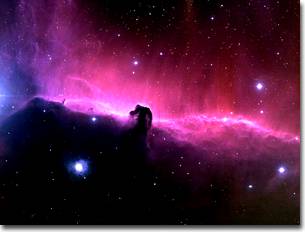
Most people don't use the term sublime the way that it was originally intended, or when they do it's usually on accident. The term is meant to describe something beyond your ability to deal with, something so grand that just realizing its existence puts you at a loss. Sometimes sublime means something scary. Not scary like a-man-coming-at-you-with-a-knife scary, but scary in the way that the unknowable is scary. Like the way that the vastness of the universe is scary. Not scary in a bad way, but scary nonetheless. Scary can be beautiful. Never be afraid to be afraid.
Rivers Johnson - Nietzsche's Apollo and Dionysus
The dichotomy between the Apollonian and the Dionysian is everywhere around us. Simply look at the leaf of a tree and you are part of this battle. It seems that our society seems to view life in terms of beauty or in terms of explanation and order. The leaf can either be regarded as beautiful and admired for it's form and appearance or pondered scientifically to decipher the mechanisms behind the leaf's existence.

What is sad is that people don't recognize the connectedness of these two things. The scientific study of a leaf should not simply inform you of the leaf's function, but also of it's beauty. Next time you examine a leaf closely think of how beautiful the idea of a leaf is and appreciate the wonder of nature you hold in your hands.

What is sad is that people don't recognize the connectedness of these two things. The scientific study of a leaf should not simply inform you of the leaf's function, but also of it's beauty. Next time you examine a leaf closely think of how beautiful the idea of a leaf is and appreciate the wonder of nature you hold in your hands.
Rivers Johnson - Schopenhauer's Escape From Will
Schopenhauer wrote that art was the only true escape Man has from the grasp of Will, our basal drive for survival. Out of the all the arts, Schopenhauer singled out music as the truest form of art because it speaks directly to the emotion of a person. Emotion is completely separate from the Will and therefore speaking to it separates us from the Will in a way. Schopenhauer describes great artists as geniuses because they can separate themselves from their bodily needs and focus and their art which reminds me of a song lyric I heard the other day:
"I'm not upset, just confused/And it's so tough/I can't relate to this world/I'm not bored enough/Watch out/The music will complete the change in you"
Escape from this world, music changing the listener, sounds something like what Schopenhauer is talking about, doesn't it?
"I'm not upset, just confused/And it's so tough/I can't relate to this world/I'm not bored enough/Watch out/The music will complete the change in you"
Escape from this world, music changing the listener, sounds something like what Schopenhauer is talking about, doesn't it?
Rivers Johnson - Was Plato Right About Art Being Imitation?
Plato's theory on art is based on the idea that art is an imitation of real life, which itself is an imitation of the Forms. Back when he wrote that, art generally was representative of real things. But how does this view hold up when we take into account modern art?

Jackson Pollack's work is world renowned and generally accepted to be art. But his art certainly doesn't fit into Plato's view of art as imitation of real life. So either Pollack's work cannot be art or Plato was wrong. Thoughts?

Jackson Pollack's work is world renowned and generally accepted to be art. But his art certainly doesn't fit into Plato's view of art as imitation of real life. So either Pollack's work cannot be art or Plato was wrong. Thoughts?
Rivers Johnson - Audience Involvement
I recently watched a great video online about overcoming apathy in today’s society. In the video the speaker discusses communication techniques that we could implement in order to get people more involved in politics and other facets of responsible society. A few of the techniques he spoke about included ways to involve the audience to stimulate response and this reminded me of the talks we had earlier in the semester about the relationship between performer and audience. What do you all think about what the speaker has to say? Do you think greater audience involvement would lead to greater societal participation?
Thursday, April 28, 2011
Hank Harrison - Sport as a form of Art
In another blog entry, I said I felt like my laptop is in some way a form of art because of the creative engineering that went into producing and designing it. Are there, though, other forms of art? At the moment I'm watching the beginning of the NFL draft and it got me thinking about sports. After a few moments of thought, I realized I find much beauty in sport, specifically football.
Imagine a field of 22 men, each facing off with a man of the opposite team. That means eleven different little battles being fought or one purpose: to move the ball downfield. A play, for example, that calls for a deep pass down the field is something that requires a massive amount of coordination and determination. The quarterback snaps the ball and the linemen each block their man and provide a pocket for the quarterback to stand in. The receivers sprint downfield, executing cuts and dodges in order to run their rout to perfection. Just when the quarterback sees an open man, a defensive end comes barreling through the offensive line at the QB's blindside like a freight train through a tunnel on track for a collision. Just in time, the running back picks up the block and gives the QB another two tenths of a second... just long enough to launch the ball 40 yards down field where he thinks the receiver is going to be. The receiver has to find a way to break from his defender and make his way to the ball flying through mid air. Using all the energy he has at his disposal, he churns his legs just a little faster and leaves the defender behind. He snatches the ball from the air with outstretched hands and falls into the endzone...
Or, maybe the quarterback gets laid out at the start of the play. Such is football, such is sports, and such is the reason (in my view) that a completed deep pass in football is one of the most beautiful things in sports. It is perfect coordination and adaptive ability between eleven men doing their part to achieve the same goal.
Imagine a field of 22 men, each facing off with a man of the opposite team. That means eleven different little battles being fought or one purpose: to move the ball downfield. A play, for example, that calls for a deep pass down the field is something that requires a massive amount of coordination and determination. The quarterback snaps the ball and the linemen each block their man and provide a pocket for the quarterback to stand in. The receivers sprint downfield, executing cuts and dodges in order to run their rout to perfection. Just when the quarterback sees an open man, a defensive end comes barreling through the offensive line at the QB's blindside like a freight train through a tunnel on track for a collision. Just in time, the running back picks up the block and gives the QB another two tenths of a second... just long enough to launch the ball 40 yards down field where he thinks the receiver is going to be. The receiver has to find a way to break from his defender and make his way to the ball flying through mid air. Using all the energy he has at his disposal, he churns his legs just a little faster and leaves the defender behind. He snatches the ball from the air with outstretched hands and falls into the endzone...
Or, maybe the quarterback gets laid out at the start of the play. Such is football, such is sports, and such is the reason (in my view) that a completed deep pass in football is one of the most beautiful things in sports. It is perfect coordination and adaptive ability between eleven men doing their part to achieve the same goal.
Hank Harrison - Art as an Escape
A number of the philosophers we have studied this semester discuss what art's purpose is. Plato seems to think of art as a distraction, Aristotle seems to think of art as a way to teach us about ourselves (specifically through drama) and Schopenhauer believes art reveals metaphysical truths about reality. Nietzsche, though, seems to think of art as an escape. He is about as much of a bummer as Schopenhauer is as far as believing that we're all just dying one life long and that life is a struggle, but he thinks of art as a way to cope with said struggle. Art is how we put a smile on our usually frowned face.
Nietzsche holds that there are two main kinds of art: Apolline art and Dionysiac art. The former is designed mostly as this kind of escape. It is a dream world that keeps the terrors of life at bay and allows us as human beings to find some kind of superficial peace while we wait to die. Dionysiac art, on the other hand, is art that absolutely intoxicates us. It is Subliminal art, as Schopenhauer might have said. It is the feeling we get when were in the middle of a huge singing crows at a rock concert. We allow ourselves to be totally taken over by and directed by it. Now thats an escape, and its another reason why I believe music to be the highest form of art.
Nietzsche holds that there are two main kinds of art: Apolline art and Dionysiac art. The former is designed mostly as this kind of escape. It is a dream world that keeps the terrors of life at bay and allows us as human beings to find some kind of superficial peace while we wait to die. Dionysiac art, on the other hand, is art that absolutely intoxicates us. It is Subliminal art, as Schopenhauer might have said. It is the feeling we get when were in the middle of a huge singing crows at a rock concert. We allow ourselves to be totally taken over by and directed by it. Now thats an escape, and its another reason why I believe music to be the highest form of art.
Hank Harrison - Heidegger
In my opinion, Heidegger is one of the most broad thinking philosophers in the curriculum second only to Kant. Heidegger thinks of art as not only an object, but an experience shared between the observer and that what is being observed. A piece of art is not defined only by its material make up but by the experience an observer has. This experience reveals truth about being in that it provides an example of the sum of a culture's progress to the point the artwork was produced. An observer can effectively look into that culture and partially understand it through their experience of that art.
My favorite element of Heidegger's is that he distinguishes art from other objects produced. He says that an object proclaims its purpose or function whereas art, on the other hand, proclaims its existence. Art exists! Its beautiful! Job done! A hammer, on the other hand, is not really worth anything until it is used. Maybe a hammer functions "beautifully," but a piece of art IS beautiful as it is.
My favorite element of Heidegger's is that he distinguishes art from other objects produced. He says that an object proclaims its purpose or function whereas art, on the other hand, proclaims its existence. Art exists! Its beautiful! Job done! A hammer, on the other hand, is not really worth anything until it is used. Maybe a hammer functions "beautifully," but a piece of art IS beautiful as it is.
Hank Harrison - Schopenhauer
For such a bummer of a philosopher, I think Schopenhauer's outlook on art is well thought out and rather optimistic. His epistemology is based largely off Kant's, so I'll skip talking about the concept of separate perceptions for each person and the fact that the world we perceive is disconnected from "reality" and how the world actually exists. The difference between Kant and Schopenhauer that most sticks out to me is that Schopenhauer believes that we can access the "real" world that our senses inaccurately perceive. He believes we can do so through art. Art, to Schopenhauer, is representative of not only something in reality but of the idea that rests behind the artwork. Its not the painting, its what the painting represents. Interestingly, Schopenhauer incorporates Platonic theories as well as Indian philosophies into his own.
I think this says a great deal in favor of Schopenhauer's intellectual ability. Unlike Hume, who I believe is restrained by his own hypothesis, Schopenhauer is open minded enough to learn from the thinkers that came before him and apply their rational to his own. Unfortunately, his outlook on life is totally gloomy, but at least he wasn't closed minded.
I think this says a great deal in favor of Schopenhauer's intellectual ability. Unlike Hume, who I believe is restrained by his own hypothesis, Schopenhauer is open minded enough to learn from the thinkers that came before him and apply their rational to his own. Unfortunately, his outlook on life is totally gloomy, but at least he wasn't closed minded.
Hank Harrison - Kant
Ive noticed that Kant's philosophy in art, as in epistemology, has permeated through so many other philosophers. Schopenhauer and Nietzsche especially, Kant's view of the world seems to be especially coherent. His inclusion of the human perception as being different for every person seems to be totally logical. We all do, in at least some regard, live in completely different worlds. We all act on information gathered through our senses and computed in our minds, and each of these functions are totally subjective. What, then, is actually universally applicable to all human beings? Kants answer, I believe, is logic and reason. This is not to be confused with sciences like physics because, as Kant says, these are further abstractions from reality. The reality that we experience is not necessary dictated by formulas and Newtonian laws alone but by something more. This something more, in my view, is our perception. We apply what we receive in data and think in our minds to our own subjective rationality.
Thus, physics and chemistry and mathematics are only tools we can use to further process what we detect in reality, not rules to which reality must adhere.
Thus, physics and chemistry and mathematics are only tools we can use to further process what we detect in reality, not rules to which reality must adhere.
Hank Harrison - Hume
How could Hume possibly have felt like he was on to anything when he was trying to quantify exactly what makes something beautiful? I've never been much of a fan of Hume's works, but with art I feel he is especially misguided. He even contradicts himself regularly. For example, when he says that beauty is objectively based somewhere, how then can he say there will be disagreements? If beauty is objective and universal, that would mean there are no disagreements on what is beautiful. Hume says these differences would be based on either cultural influences or psychological influences. In my opinion, this is Hume copping out of having to admit his original premise is totally incorrect. It sounds to me like he wants so badly to value his "sentiments" as the source for beauty that he cannot figure out a way to explain things in a more coherent manner.
Hank Harrison - On my roof
Especially when finals are approaching, I find the library to be too crowded and distracting, so I prefer my roof. On my roof, I sit under a huge canopy of all different kinds of trees. The privacy fences on either side are totally covered in vines leading up to the trunks of the trees which are then draped by the canopy itself. Its like I'm sitting in a cathedral of green with light blasting in through the gaps to illuminate my studies and enlighten my perception of what is naturally beautiful. I dont know if this is the sublime or if this is any kind of higher form of art, but from my perception I most definitely see beauty. As Kant might say, I know its beautiful simply from the fact that I derive pleasure from mere contemplation of sitting on my roof observing the trees. Whenever I try to quantify the feeling I get from roof-studying, I simply cant. Words cant contain feelings, especially feelings from observing beauty. This is how I feel that nature can be art, and the work of art in nature that I see from the roof is especially beautiful.
Hank Harrison - My Laptop
How often do we think of the things that we use as beautiful? People usually dwell on paintings or poetry as being worthy of consideration for beauty but what about the things we use? My laptop for example, I think is absolutely beautiful. It helps me do what I need to do in such a flowing efficient way. Its a Mac, so that means it has a snazzy aluminum body and the software is totally integrated with the hardware. The touchpad is so well thought out that it feels like an extension of my own hand. I feel like I can literally reach into my desktop screen and grab an icon. The screen itself is more than just a collection of pixels we can use to depict an image, it becomes the image itself. My background right now is a high definition picture of a perfect barrel wave with a surfer cruising through the middle, and through my laptop, I can view and manipulate the image. Through my laptop, I am connected to the rest of the world and to a certain extent, to the art the world has to offer and this connection is made, by my laptop, almost seamlessly. If this is art, it is the art of execution and efficiency, and it takes more than a utilitarian mindset to create it: it takes imagination and creativity. That is why I feel like my laptop is in some way a work of art.
Sunday, April 24, 2011
Rachel Worthington: "Nature" is What We See
"Nature" is What We See:
"Nature" is what we see --
The Hill -- the Afternoon --
Squirrel -- Eclipse -- the Bumble bee --
Nay -- Nature is Heaven --
Nature is what we hear --
The Bobolink -- the Sea --
Thunder -- the Cricket --
Nay -- Nature is Harmony --
Nature is what we know --
Yet have no art to say --
So impotent Our Wisdom is
To her Simplicity.
- Emily Dickenson
In this poem, Dickenson is presenting to the reader her experience with the presence of God through his works in nature. She contemplates on nature and uses each example of it as a way to communicate how humans are inherantly one with it. The hill, bumble bee, sea, eclipse and soforth are examples of nature that humans hear, see and know; however, it is the meaning that the objects have is where one finds the divinity with in them. By discovering the beauty and meaning behind nature, one begins to understand theirself in relation to nature. Dickenson speaks of harmony between the self, nature and the Divine. Using a phenomenological approach, she attempts to represent the difference between things we simply observe with our senses with the things we engage our senses into. Lines 9 and 10 express how we know nature because we are of it, but we can only try to recreate the feeling of unity with it through art. She illudes to the notion that one can find themselves when they look for the self in nature.
Baker, Abu, and M. S. Ahmad. "Delving into the Mysteries of Dickinson's "'Nature' Is What We See"/ETUDES APPROFONDIES SUR LES MYSTÈRES DE "'NATURE' EST CE QUE NOUS VOYONS" DE DICKINSON - This Article Is an Attempt to Decipher the Meaning of Emily Dickinson's Poem 668 "'Nature' Is... - Canadian Social Science." Internet FAQ Archives - Online Education - Faqs.org. Canadian Social Science, 1 Nov. 2010. Web. Apr. 2011..
"Nature" is what we see --
The Hill -- the Afternoon --
Squirrel -- Eclipse -- the Bumble bee --
Nay -- Nature is Heaven --
Nature is what we hear --
The Bobolink -- the Sea --
Thunder -- the Cricket --
Nay -- Nature is Harmony --
Nature is what we know --
Yet have no art to say --
So impotent Our Wisdom is
To her Simplicity.
- Emily Dickenson
In this poem, Dickenson is presenting to the reader her experience with the presence of God through his works in nature. She contemplates on nature and uses each example of it as a way to communicate how humans are inherantly one with it. The hill, bumble bee, sea, eclipse and soforth are examples of nature that humans hear, see and know; however, it is the meaning that the objects have is where one finds the divinity with in them. By discovering the beauty and meaning behind nature, one begins to understand theirself in relation to nature. Dickenson speaks of harmony between the self, nature and the Divine. Using a phenomenological approach, she attempts to represent the difference between things we simply observe with our senses with the things we engage our senses into. Lines 9 and 10 express how we know nature because we are of it, but we can only try to recreate the feeling of unity with it through art. She illudes to the notion that one can find themselves when they look for the self in nature.
Baker, Abu, and M. S. Ahmad. "Delving into the Mysteries of Dickinson's "'Nature' Is What We See"/ETUDES APPROFONDIES SUR LES MYSTÈRES DE "'NATURE' EST CE QUE NOUS VOYONS" DE DICKINSON - This Article Is an Attempt to Decipher the Meaning of Emily Dickinson's Poem 668 "'Nature' Is... - Canadian Social Science." Internet FAQ Archives - Online Education - Faqs.org. Canadian Social Science, 1 Nov. 2010. Web. Apr. 2011.
Rachel Worthington: Religion and Art
The world that we perceive in our minds is different from the world that actually exists. When one is "seeing" something, the thing that is being observed upon gets meshed together with passions and the emotions drawn from those passions. Historian and art critic, James Elkins, asserts that "seeing alters the thing that is seen and transforms the seer," (Plate, 21). Art is a representation of what is seen, and it communicates an original presence. Of course, the word representation implies somewhat of an alteration of the original because it is conveyed by one person's individual perception. Art refreshes the seer and gives him a different way of looking at the world. Religious art, including rituals, recreates the initial essence of something so that the seer can share in the religious experience. Art is a vehicle for the senses and consciousness to escape the every day world and allows one to "see religiously," (Plate, 22). Once the seer is transformed in this way, he begins to see everything differently. One will find himself "noticing things [not] noticed before; time moves slower or faster; and new ways of thinking are" integrated into the person's overall view of the world. It is because of these affects art has on humans that religious art holds such immense power.
Plate, S. Brent. Religion, Art, and Visual Culture: a Cross-cultural Reader. New York: Palgrave, 2002. Print.
Plate, S. Brent. Religion, Art, and Visual Culture: a Cross-cultural Reader. New York: Palgrave, 2002. Print.
Sean Meslar- KPAX
For once, I don't have a philosopher to reference for this film. I think an interesting theme to keep in mind which relates closely to the central theme of the film is that of personal identity. Are we defined by what we think we are or the circumstances associated with our existence? While our reductionist scientific worldview tends to suggest that there is an objective definition attached to our identity, I tend to disagree. Everything that can be said to be true of a person is a byproduct of his or her mind rather than their body. This position stems from my more (philosophical)idealist/ dualist worldview which values the immaterial over the material. David Hume's sharp critique of causality destroyed any faith I had in the scientific method or the reliability or importance of the physical. So if Prot thinks that he is from KPAX, he should probably be taken to be the authority on the issue. This stance may come into conflict when we consider those who are labelled insane (as was Prot), there are many instances of the insane holding delusional truths that don't seem to correspond to anything reasonable. To this I have a, perhaps slightly comical, philosophical solution. In order to be considered sane, every person must be able to understand, articulate and demonstrate Descartes's cogito (I think therefore I am) and Aristotle's law of non-contradiction. Problem solved... just so long as the psychiatric community takes my word to be the authority.
Rachel Worthington: A Song in the Breeze
I had just gotten out of my religious studies class, where we had been discussing the power of meditation. We had been talking about how meditation could help an individual discover the one true self and become enlightened. I walked home from class that night, and as I approached my house, I felt the urge to sit out back and do a little meditating myself. I sat in the yard and just listened to the Earth, as the crickets and the wind sung softly in my ear. I heard the rythm of the nature around me, but I tried to focus on my breath. I meditated for about 20 minutes. When I opened my eyes, I felt a sense of calmness and love for nature. I sat for a few more minutes in the darkness, before I ran inside to get a pen, paper and my guitar. The song lyrics below were inspired by my realizations and sense of inner peace that I got from removing myself from the world I mindlessly perceived every day. My consciousnes felt broadened and infected with the knowledge of something I could not quite identify. I felt a powerful essence that night, which gave me a brief but glorious sense of awareness and unity with the cosmos. That essence is the focus of this song.
It is the mountains on the horizon.
No matter where you look you can't see on.
Wonder farther through the valley,
In search for this Blessed One.
As your feet collect the dust from
The wreckage of the age of time,
In yourself you'll finally find it:
A light for the blind,
On all it shines,
You will find,
In Dying 1,000 times.
As a voice whispers so softly,
you wonder if it's He or you or me.
And it's singing of the wisdom,
as the notes float on the breeze.
It's fleeting fast, you won't forget it
because it rests within our core.
You're getting closer to the One from
which all beauty was born.
Take a breath, detach and listen
and soon the world will go
and the wind will blow
then you'll know
we're all, mono-soul.
It is the mountains on the horizon.
No matter where you look you can't see on.
Wonder farther through the valley,
In search for this Blessed One.
As your feet collect the dust from
The wreckage of the age of time,
In yourself you'll finally find it:
A light for the blind,
On all it shines,
You will find,
In Dying 1,000 times.
As a voice whispers so softly,
you wonder if it's He or you or me.
And it's singing of the wisdom,
as the notes float on the breeze.
It's fleeting fast, you won't forget it
because it rests within our core.
You're getting closer to the One from
which all beauty was born.
Take a breath, detach and listen
and soon the world will go
and the wind will blow
then you'll know
we're all, mono-soul.
Rachel Worthington: The Cosmic Dance of Shiva

Cosmic Dance of Shiva: http://www.youtube.com/watch?v=v5hO8YFroLI&feature=related
This video is of an Indian girl dancing the Cosmic Dance of Shiva. Every movement of her body was a symbolic for the power and worship of Shiva. The third eye symbol on the girl's forehead is representative of the Shiva, both as the Destroyer and the Creator. Her movements are reenactments of the dance of the universe, as it continually is destroyed, only to be re-created again by Brahman. The placement of her fingertips in parts of the dance shaped the sacred syllable, OM, which symbolizes the beginning and the end. The purpose of the dance is to bring about a spiritual energy that exists in all of nature and the cosmos. The beauty and grace of the dancer is derived in the beauty and divinity found in nature.
Saturday, April 23, 2011
Brandon Ferry - Dance and Philosophy
Sacred and Profane Beauty has brought up the subject of dance in regards to philosophy countless times as this semester has gone on. Specifically the notion of dance capturing a moment while the world seems to stop is extremely interesting to me. "The real" and everything around it are what the dancer feels during this euphoric experience, and feelings of spirituality must be intrinsically felt by the dancer as well. A world behind this world is experienced if the dancer truly loses them self in such a spiritual moment and in that case the concept of ecstasy takes hold. With such an intrinsic connection to ecstasy, the euphoric state of dance can only be completely understood by the dancers themselves as they encounter a great human experience on this earth.
Subscribe to:
Posts (Atom)